This guide gives you a clear, realistic restaurant social media marketing game plan. It walks you through which platforms fit your concept, what to post when your team is already stretched thin, and how to connect your social media presence to future orders.
Get guideThe 10 tips here are built for operators running busy kitchens on Friday nights, not marketing departments.
The effort will inevitably pay off. An MGH survey cited by QSR Magazine found that 74% of consumers who actively engage with restaurants on social media are more likely to visit. According to SevenRooms' 2025 data report, 69% of Gen Z rely on social media to discover restaurants. If you've been posting once in a while and hoping for the best, this is the place to build a strong marketing strategy that works in real life and start growing a loyal restaurant social media following.
What Is Social Media Marketing for Restaurants?
It’s relatively simple: social media marketing for restaurants means using platforms like TikTok, Facebook, and Instagram with a plan — a plan to build brand awareness, reach new diners, and keep existing customers coming back. Done well, it moves people from scrolling past your content to sitting at one of your tables or placing a delivery order.
A common misconception is that social media is about racking up likes and followers. Those numbers feel good, but they don't help cover your food costs on their own. The goal is creating touchpoints that move people from discovering your restaurant to ordering from it — and eventually becoming regulars who bring their friends.
Why Social Media Now Determines Whether You Fill Tables
Social media has shifted from a pastime to one of the primary ways new customers find restaurants. According to the 2025 DoorDash Delivery Trends report, 28% of Millennials and 27% of Gen Z rely on social media when making meal decisions.
Restaurants without an active, consistent presence on at least one major platform are simply invisible to a share of their potential audience that is only growing. Your own website and online ordering system — which we'll cover later in this guide — are where the transaction takes place.
How Customers Discover Restaurants in 2026
For younger diners especially, the customer journey often starts on Instagram — a friend tags your restaurant, they look through your profile to check the menu and vibe. They then head to Google to check out your customer reviews, and from there, finally decide whether to visit or order. Strong TikTok & Instagram marketing for restaurants or makes that first impression easier to convert, with clear menu highlights, up-to-date Stories, and a profile link that sends people directly to your ordering page.
10 Social Media Marketing Tips for Restaurants
These 10 tips are built for operators who don't have a dedicated marketing team.
Each is practical and focused on moving people from discovering your restaurant to ordering from it directly — through your own website or online ordering page — so you can turn a restaurant social media follower into a repeat guest.
1. Establish a Clear Brand Voice and Tone
Build a restaurant brand voice that shows off who you are online — the personality behind every caption and reply. Write down three to five words that describe how you want to come across. A fine-dining spot might be elegant and refined. A taco truck might go with casual and lighthearted. Pick a direction and check every caption against it before you post.
2. Define Your Visual Style and Stick to It
Pick two or three signature colors, settle on a consistent editing style for your photos, and apply both every time you post. Diners scrolling their feed should recognize your content before they see your account name.
If you want extra help, Canva has restaurant templates you can customize with your own colors and photos — no design experience needed.
3. Show What Happens Behind the Scenes
Your kitchen generates this content every shift — a chef prepping specials, your team setting up for service, a produce delivery coming through the back. Filming something that’s happening anyway takes just a minute, and encourages diners to connect with the people behind the food in a way a plate photo alone can't achieve.
This type of content can get more views and comments than polished promotional posts.
4. Create a Consistent Posting Schedule
Three posts a week every week is better than ten posts one week and nothing the next. Set a goal your team can sustain. Batch your content on a slow afternoon; meaning, create multiple social media posts in one go, to avoid having to create a new upload each day. Schedule those posts in advance by using a free tool like Meta Business Suite.
If you're stuck on captions, ChatGPT can generate ideas based on your menu or upcoming events — use it for a starting point, then adjust to sound like your restaurant.
5. Prioritize Short, Vertical Video Content
According to SocialInsider, Reels, TikToks, and Instagram Stories consistently outperform static images for reach. That same DoorDash 2026 Trends Report found that 87% of consumers say photos or videos have influenced what they order.
Keep it simple — a 15-second clip of a dish being plated or a chef walking through a special is more than enough. Smartphone video with natural light often outperforms overproduced content. These clips also work beyond your feed — connect content to your website or DoorDash Marketplace to give new visitors a feel for your restaurant before they order.
6. Engage With Your Community (Don't Just Post)
Social media is a two-way conversation. Responding to comments, replying to DMs, and acknowledging when customers tag you signals to your followers and to the platform that your account is active. Set aside 10 to 15 minutes a day for engagement, separate from the time you spend posting.
Local engagement helps, too. Commenting on posts from neighboring businesses or tagging them in relevant content builds goodwill and puts your restaurant in front of their audience.
7. Encourage and Repost User-Generated Content
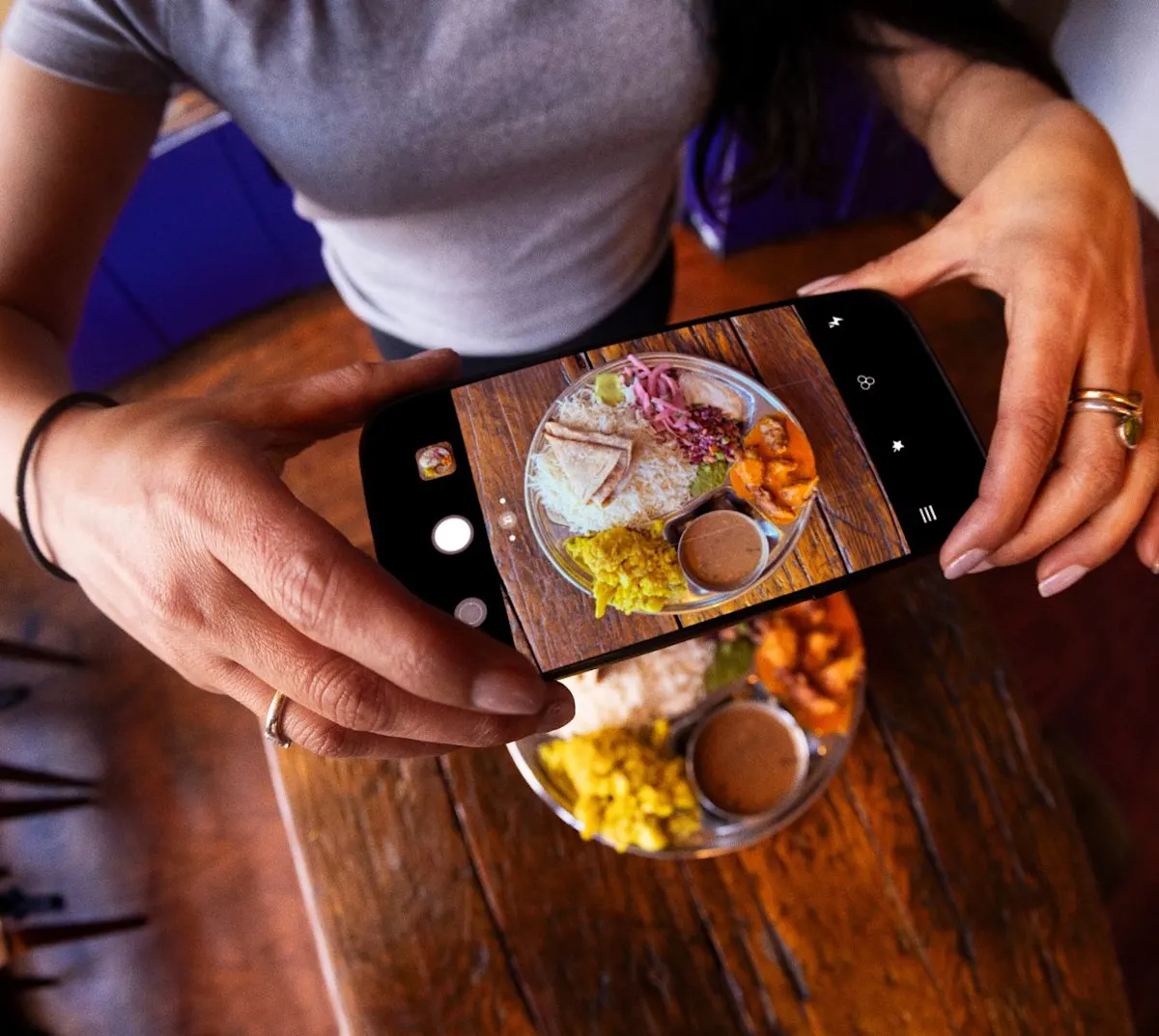
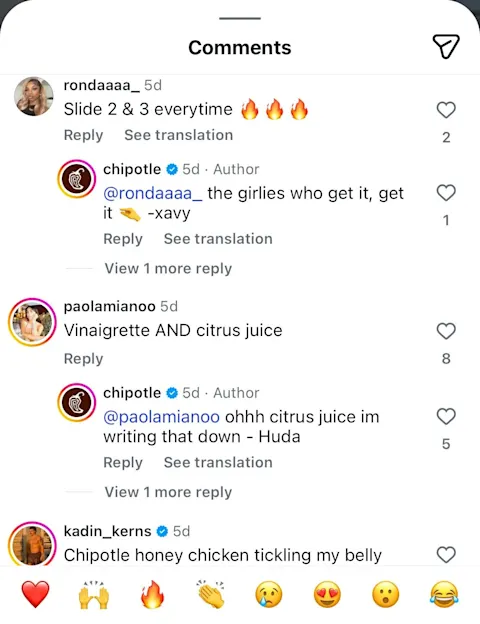
User-generated content (UGC) — photos and videos your customers post of their experience at your restaurant — is free marketing and often more trusted than anything you post yourself. Make it easy by creating photo-worthy moments: a signature dish with distinctive plating, a neon sign, a view from your patio. Add a hashtag to your menu or a small table card so customers know where to tag you.
When a customer posts something good, ask permission and repost it. Always credit them. A steady stream of UGC fills your content calendar and shows potential diners what a real visit looks like.
8. Spotlight Your Staff Members
Introduce your head chef. Post a birthday shout-out for a server. Show a new hire's first week on the line. These posts humanize your restaurant and build an emotional connection that food photos alone can't. These posts often get stronger engagement than food photos alone and differentiate you from competitors who only post menu items.
9. Use Paid Ads to Amplify Your Best Posts
Get your organic presence stable before spending on ads. Once you have eye-catching posts that generate strong engagement, put a small budget behind them — for many restaurant owners, somewhere between $50 and $200 a month is a reasonable starting range. Avoid building ads from scratch; boost what's already connecting with your audience.
The best use cases for paid ads are event promotion, limited-time offers, new menu items, and grand openings — moments where reaching beyond your existing followers has a clear payoff.
10. Turn Social Followers Into Direct Customers
Social media brings people to your door — your job is to give them a clear next step. Add a direct ordering link to your Instagram bio and Facebook page. Promote exclusive offers for followers who order directly. Use a link-in-bio tool to funnel profile visitors to your own website or online ordering page.
This is where DoorDash Commerce Platform connects social media to your own ordering channels. Online Ordering and a Branded Website give you a commission-free direct channel that connects your social presence to your own customer relationships. That means more of each direct order stays with your restaurant. DoorDash Commerce Platform requires an active DoorDash Marketplace account; payment processing fees apply.
How Often Should Restaurants Post on Social Media?
Focus on consistency instead of volume. Three solid posts a week will do more for your presence than a burst of daily posting followed by two weeks of silence.
Here are realistic targets by platform:
Instagram: 3–5 posts per week across feed and Stories
Facebook: 2–3 posts per week
TikTok: 3–5 videos per week if you've committed to the platform
The easiest way to hit those numbers without it taking over your week is to batch your content. Set aside one slow afternoon every two weeks, shoot what you need, write your captions, and schedule everything in advance using a free tool like Meta Business Suite. You show up consistently online without thinking about it during service.
Social Media Metrics Restaurants Should Track
Most operators track likes and follower counts because they're the easiest numbers to see. Neither indicates whether or not social media is bringing in orders. Here are the five numbers to watch instead:
Website clicks from social: Shows how many people tap your bio link and land on your website or ordering page — the first step toward a transaction
Order Now button clicks: Shows how often your social profile turns into a potential order, not just a visit
Engagement rate: Comments and shares signal that your content is connecting with people, not just being scrolled past
Story views: A steady count tells you your regular followers are paying attention between posts
Direct Message (DM) inquiries: Customers asking about hours, reservations, or menu items through DMs are warm leads worth responding to quickly
Track these inside Instagram Insights and Facebook Page Analytics. To drive traffic to your website, add UTM parameters — short tags you add to a link so Google Analytics can show which post sent a visitor to your site — so you can tie specific posts to orders.
Common Social Media Mistakes Restaurants Make
Posting without a social media strategy.
Random food photos with no consistent voice or theme make your profile look like no one is running it. Define your brand voice, pick a few engaging content themes — menu highlights, team spotlights, behind-the-scenes — and post on a schedule.
Only promoting specials and discounts.
An account full of deals trains customers to wait for them. Follow the 80/20 rule: 80% of your posts should offer something interesting — a recipe, a team introduction, a kitchen moment — and 20% can be promotional.
Ignoring comments and DMs.
Customers who take the time to comment or direct message expect a response. Ten minutes a day should be enough to stay on top of it.
Turn Your Social Media Followers Into Repeat Customers
Building an audience on Instagram, Facebook, or TikTok is only half the equation. The other half is capturing those followers as customers you can reach directly — people you can bring back without relying on a platform to put your content in front of them.
When someone taps the link in your bio, they should land on your own ordering page, not a third-party platform. DoorDash Commerce Platform's Online Ordering, Automated Email Marketing, and Branded Mobile App help you set that up across your own channels. Commerce Platform requires an active DoorDash Marketplace account; payment processing fees apply.
The results add up. Online Ordering can increase sales by up to 8% of current Marketplace sales. Automated Email Marketing boosts order frequency by an average of 15% among new and returning customers.*
*Based on internal DoorDash data from Jan 2025 through May 2025.
Activate DoorDash Commerce Platform
Get The Social Media Marketing Guide